What is inclusion?
A moment earlier in the week at work got me thinking about inclusion and adjustments, and my experience of them in the workplace. To be fair, I will focus on the positive experiences but no inferences should be drawn from who, what or where I have omitted (i.e. don’t assume my experience was bad in other cases).
Since being diagnosed with ADHD, in September 2024, I have been diagnosed with a myriad of physical and neurodevelopmental health conditions. I did briefly mentioned my autism diagnosis in my post about CIUK 2025. I will probably write a post about all of the ways in which the doctors have concluded my body and mind are broken, at some point (I intend to, it’s just emotionally challenging).
So, back to the point… What is inclusion?
Searching online for a definition, I found that the Government Security website (“This site is the home of security strategies, standards, policies, and guidance for UK government departments and their arm’s length bodies.”) defines inclusion as:
Inclusion
Inclusion refers to the practice or policy of providing equal access to opportunities and resources for people who might otherwise be excluded or marginalised, such as those who have physical or mental disabilities and members of other minority groups.
The Civil Service definition of inclusion highlights three key components:
- Belonging – feeling like you belong in your organisation and team
- Authenticity – feeling like you can be your authentic self at work
- Voice – feeling like you have the opportunity to speak up and are heard
What isn’t inclusion?
I think there is a distinction between “inclusion” and “accommodations” (or “adjustments”, I am using those two words synonymously), or this blog post doesn’t work. Inclusion is being part of the whole; feeling and being a part of the wider community. Accommodations are the changes to practice or environment that happen, hopefully to help people to feel included but are also “box-ticking” to fulfil legal obligations, and end up feeling punishing or alienating if solely approached in that way.
I think that is the theme of this post, accommodations do not naturally lead to inclusion. “Inclusive culture” in the workplace is a thing that gets talked about a lot but I am struggling to think of any disability training I have been through that went beyond “we have a legal obligation to make accommodations so everyone has fair access” to “each person has a moral duty to help people feel included”. Maybe it’s another one of those unwritten rules “everyone knows”, but I don’t and that there is an example of the inclusion problem. (EDIT: This is no longer the case.)
My autistic brain isn’t good at working out these unwritten rules, so I do need to be told them directly in order to be included in the group of people who understand these social norms. In my case, it helps me that I am a people-pleaser so I naturally try to make everyone happy which masks my difficulty, and anxiety about, not understanding how I am supposed to be behaving most of the time (“but not well”, my wife adds). My difficulties expressing myself were identified by an educational psychologist at a young age and I think they are rooted in this uncertainty. I do not cope with uncertainty in any form well, it causes me extreme anxiety. I think that not being sure how to say things appropriately is why I rapidly withdraw and shutdown when I begin to feel overwhelmed, until I can cope no more then I spectacularly meltdown.
Perhaps ironically, in an emergency situation I rarely feel overwhelmed, as my very logical mind can very quickly assess the situation, weigh up all the options, policies & procedures and priorities to find an objectively good1 course of action towards resolving it. Unless I am the emergency (e.g. injured etc.), in which case I almost always feel overwhelmed and shutdown. But I digress (“tangent alert!” used to be said in meetings at the University of Birmingham - an example of how I now see people were gently accommodating my ADHD, trying to help me stay on-topic even though I was unaware it was not typical to go off on tangents all the time).
This is inclusion!
The workplaces I’ve most enjoyed working, I now look back at and recognise how accommodating people were. Without me having to ask (because I am not someone who naturally asks), without me having to have any labels (because in most of them, I didn’t have any). Inclusion is cultural, not achieved by ticking boxes. They were the places where I felt it was okay to be me. Where I could bring my authentic self to work, without fear of judgement for who I am as a person, and that enabled me to do my best work for my employer. Conversely, the places I’ve least enjoyed working are those where I have felt unable to be myself and split my energy between fitting in and working.
When I first started working at Loughborough University, as part of my induction I met with the heads of each team within the IT Services department. I distinctly remember many of them, but particularly my meeting with the Communications and Training Manager Rob Kirkwood and the part of the conversation that went something like this:
Rob: So, how are you finding working here so far?
Me: I’m really enjoying it. It seems like a certain amount of eccentricity is tolerated here.
Rob: No, I don’t think that’s right at all… it’s positively encouraged!
That, there, is inclusion. Not tolerating, but accommodating and celebrating individuals’ quirks and personalities.
My new workplace, OCF Limited has an inclusive culture. Since starting there, for me inclusion has been:
- My first day starting with my new boss (who was aware I was recently diagnosed autistic and had been through a very difficult time with the upset of that diagnosis, going through compulsory redundancy process and my mum dying at the same time) saying “before we get down to business, just give me a hand to clear this desk in my office” and, once done, “right, if you get overwhelmed in the open plan office and need somewhere quiet to work, you can come and use this desk in my office whether I am here or not”. I have so far not needed to use that desk.
- My new boss then starting with the most important things of where to make a drink and the toilets are, and showing not telling me them.
-
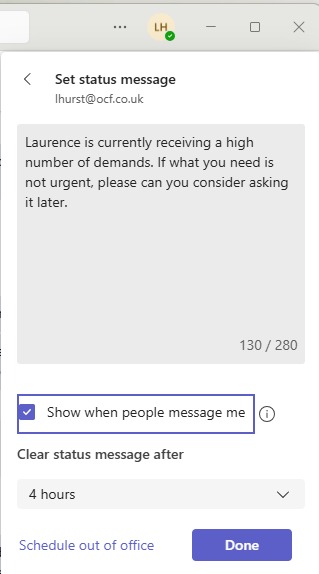
Being empowered to set status messages to manage overwhelm:
- Adjustments coming as suggestions, not impositions. For example, “since you are known to faint while on the toilet, you can use the accessible toilet because it has an alarm cord if you need help” as opposed to, possibly, saying “you must use the accessible toilet”. (For context, the accessible toilet is also the ground-floor female toilet, so being given permission to use it was helpful.)
- On that topic, adjustments being a two-way conversation - I can make suggestions, but I also get suggestions being made to me - sometimes things I wasn’t aware of impacting on others. And they are always suggestions, there’s been occasions on both sides where we have said “that won’t work but let’s talk about the barrier the adjustment is trying to overcome and see what else we can do”.
- Having my wishes completely respected when I said “I don’t mind you joking with me about my disabilities, but I’m not quite ready for you to make fun of one particular aspect yet”.
- Saying “a cheap visual timer really helps me with my time-blindness” and the next day one appeared on my desk.
- When I pointed out the alarm cord finished mid-air, so isn’t reachable from the floor (if someone has fallen, for example), it just got quietly sorted without needing to make a case about compliance or chasing.
- Working somewhere where the little things, like most of the above, that make a huge difference to my ability to work and be comfortable in the environment, seem to happen informally and naturally.
Where I work today, it feels like everyone tries to be considerate and accommodating of one another. That is inclusion.
Clearly actions are more important than words so, despite having said there’s a distinction between accommodations/adjustments and inclusion, accommodations/adjustments are necessary for inclusion. They just have to be driven by inclusion, not as a box-ticking exercise. Identifying the barriers to productivity, then working out the adjustments is inclusion, trying to do it the other way around (e.g. with a proforma “tick list of adjustments for neurodivergent employees”) I found both upsetting and alienating, when I experienced that approach. It seemed like “here is a list of all the problems we think autism causes the business in the workplace, tick which apply to you” and only catered to (for example) the sensory avoidant, not sensory seeking, neurodivergent employees. Inclusion is about conversations, not forms.
Who cares?
Well, I do for a start. I struggle socially but I desperately want to feel included and part of the team/company/crowd/tribe (pick your own collective noun for “group”).
However it’s good for the business too; over the past few months I’ve spent more than one weekend driving up to the office (>200 mile, 4hrs on a good day, round trip) to help out in an emergency. I feel very pleased to be working again somewhere where I want to go the extra mile. I’ve had several previous jobs where this has been the case and several where my goodwill dissipated and I would not have willingly worked at weekends, when I am not contracted to, for example.
A large part of my goodwill to my employer comes from feeling that I am part of the team, I am included and this starts with feeling welcomed with open arms into the organisation. I might be the weird cousin but I love working somewhere where if feels like we are a family of colleagues, rather than professional drones.
Epilogue
It is now 3 weeks since I drafted this post (typical me, starting and not finishing yet another “project”!). Last week, at a celebration for a retiring former manager and good friend of mine, I bumped into another good friend, Georgina Ellis. Georgina has known me for most of my career, and we had a brief conversation that I presume she started because I was wearing my Sunflower Lanyard (as I often do in public these days) which also epitomises what I think I am trying to say about inclusion:
Georgina: I always thought “that’s just Laurence”. I remember the first time I met you at Loughborough University; this lad who looked 12 years old and was running the entire University’s HPC service. It was amazing.
Me: It’s interesting that you should say that, I’ve just drafted a blog post about inclusion and what you just said, “that’s just Laurence” and he’s okay just being Laurence, sort of sums up the piece. One of the things I’ve been struggling with recently is, I thought I was doing a really good job of acting normal and fitting in. But when I started telling people, some who have known me for a very long time, I had just been diagnosed with autism most of them responded “yes, we know” and seemed really surprised this was a big shock to me.
Georgina: I knew, but you were just always “Laurence”.
Better training
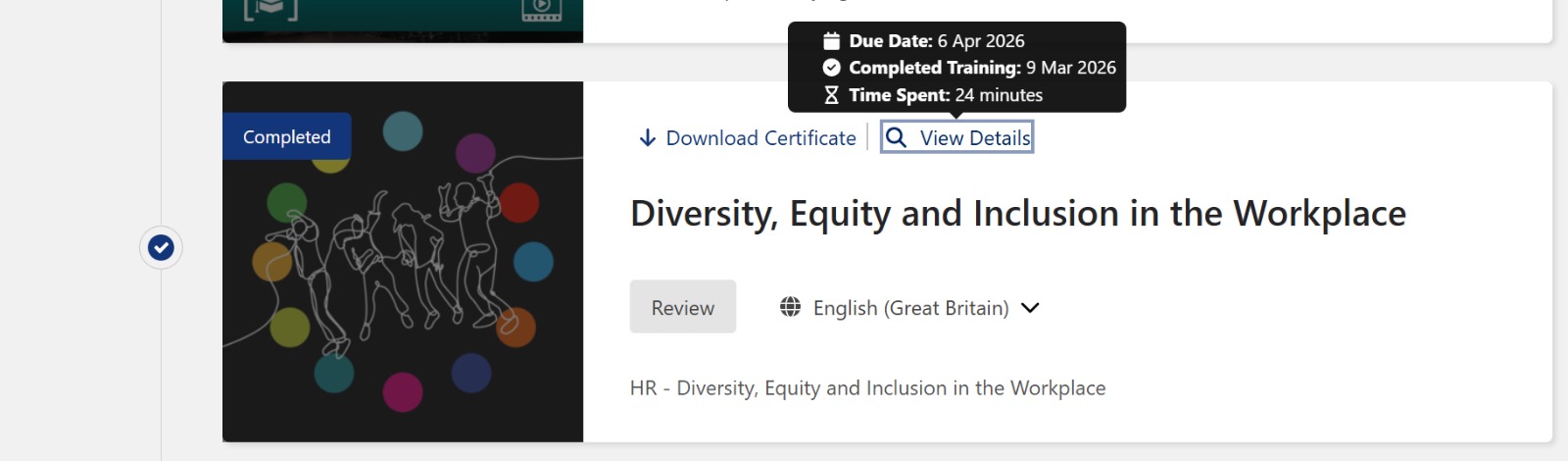
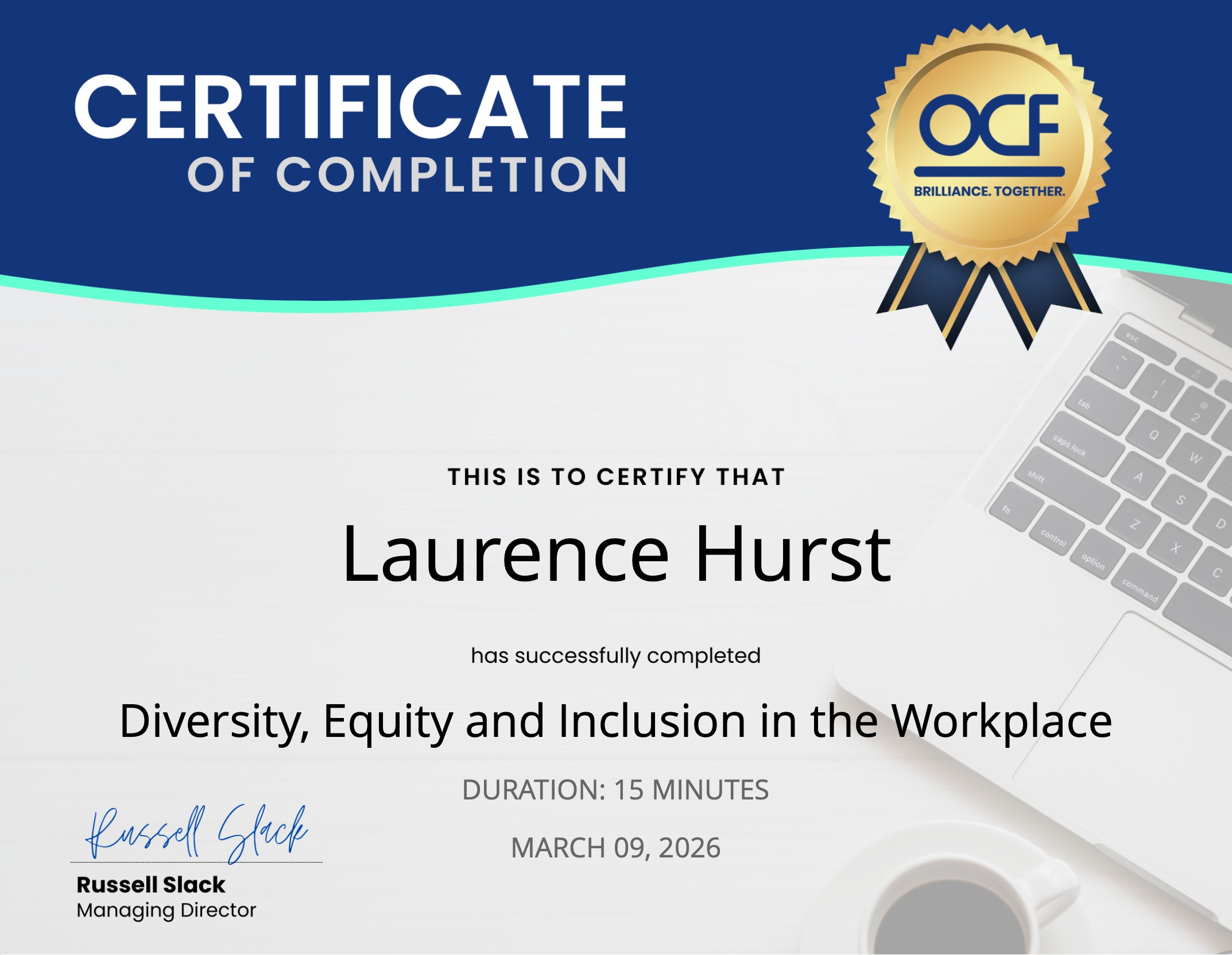
I drafted this blog post on 4th March 2026, it was not posted until 28th March 2026 partly because of my usual “start a project then never finish it” difficulty but I also sought permission from everyone named to attribute/name them before posting. I was recently reminded that during this time between writing the words and posting, I completed my new employer’s “Diversity, Equity and Inclusion in the Workplace” training course.
This course really emphasised the importance of having a diverse workplace, and ensuring a diverse range of people are in meetings to ensure voices are heard and to generate new ideas. One key message I took from it was having the same people in meetings all the time is going to result in a limited pool, and potentially stagnating, ideas. As the, often misquoted and misattributed, idiom goes: “insanity is repeating the same mistakes and expecting different results” (Narcotics Anonymous, 1981).
-
I use ‘good’ and avoid ‘best’ (e.g. in ‘good practice’, ‘good course of action’ etc.) as it implies there’s nothing better but one might not know there’s a better way at the time. A useful way to think to maintain an open mind, taught to me by Andrew Edmondson while he was my manager. ↩